Object of the Month: Spitfire Rear-View Mirror, 1940
Object of the Month (October 2025): Spitfire Rear-View Mirror, 1940
Object of the Month returned this October, with our first featured artefact chosen by volunteer Geraldine, who has also been selecting objects to go on display alongside our recent exhibition of Paul Joyce’s paintings in Remembrances of War.
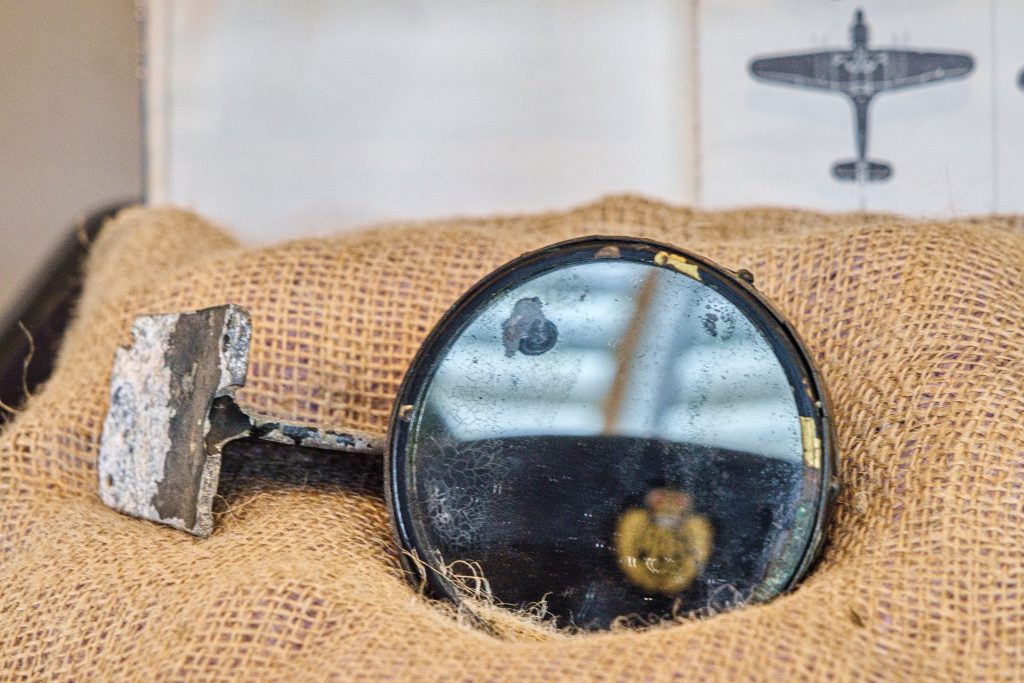
Reflecting on Oxfordshire’s wartime aviation and industry (Photo by Colin Morris).
By Geraldine Howell
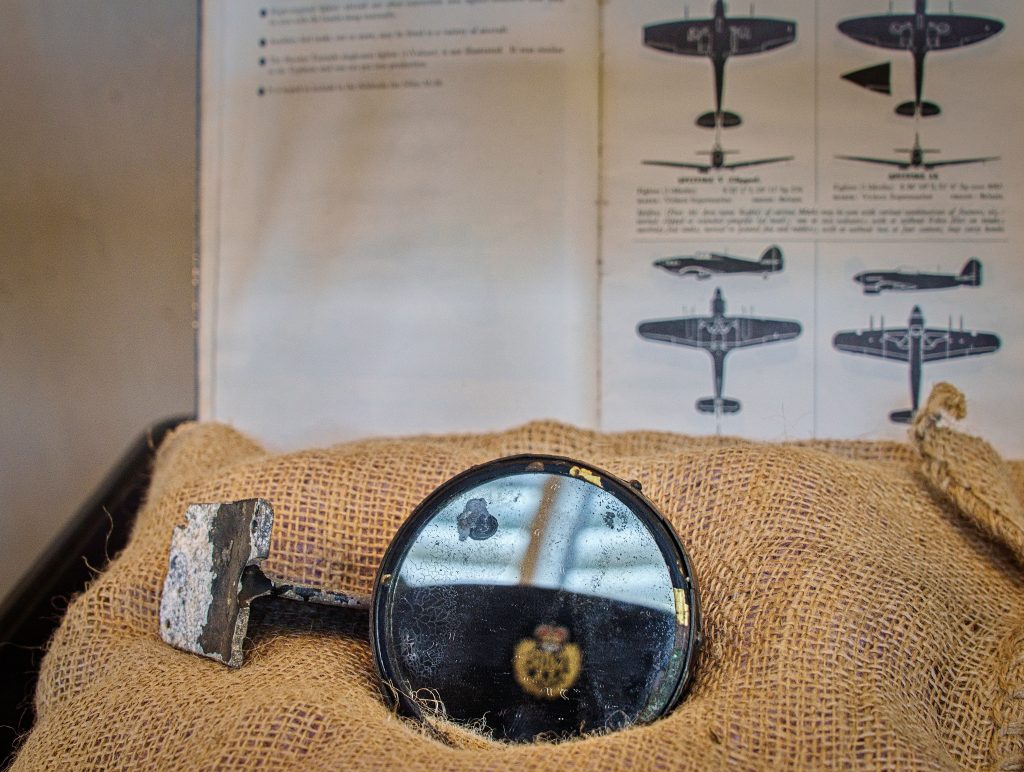
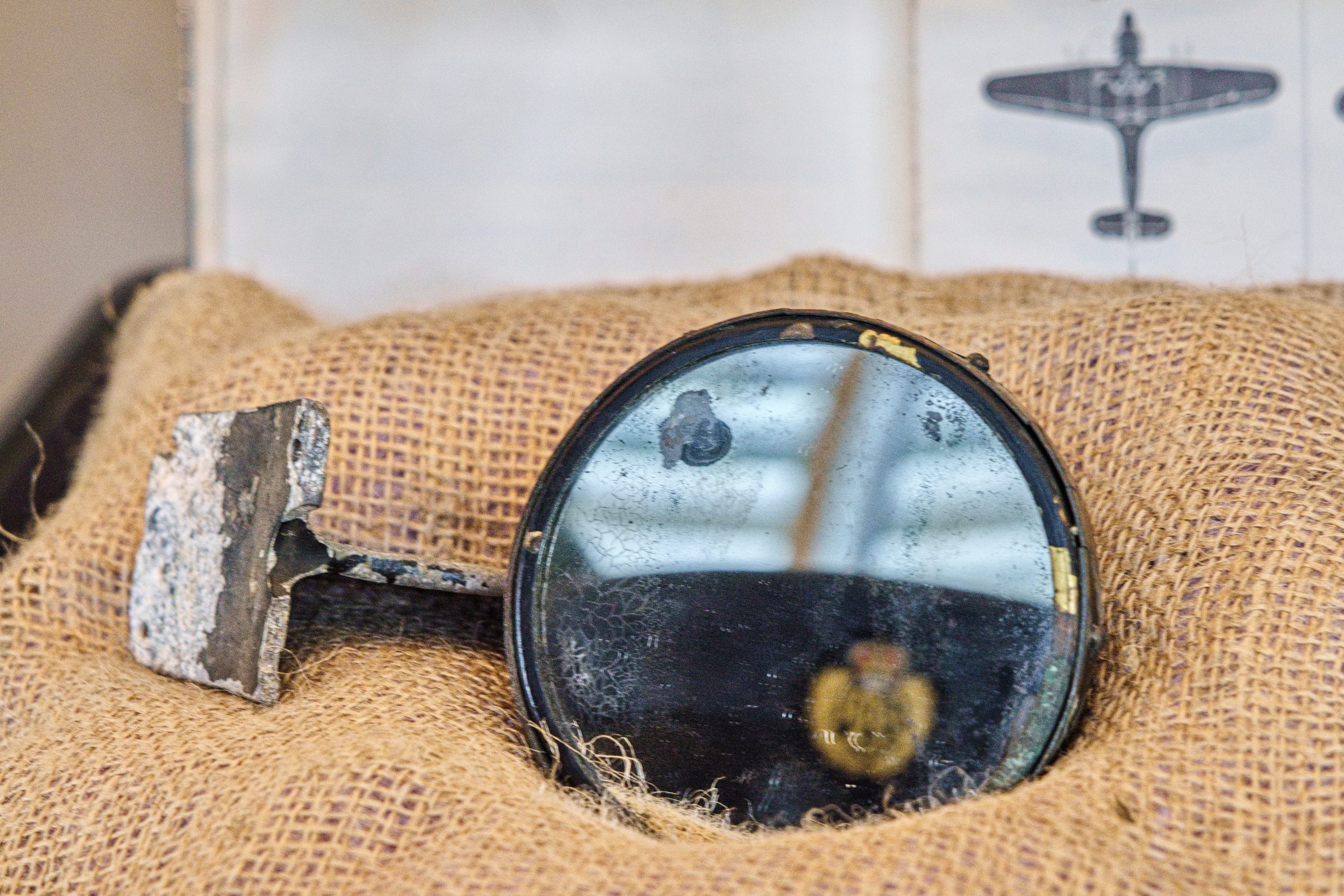
This mirror was taken from a Spitfire that had flown from North Africa to RAF Lyneham after the end of hostilities with Germany in 1945. The aircraft was cut up and melted at the Metal Produce and Recovery Depot (MPRD) at Cowley, Oxford.
The MPRD was a huge aircraft repository covering over 100 acres and “smothered in piles of wrecked aircraft over twenty feet high”. The site served as inspiration for war artist Paul Nash’s painting Totes Meer (Dead Sea) 1940-41, in turn inspiring Paul Joyce’s Der Friedhof (The Cemetery).

Der Friedhof (Paul Joyce)
The Royal Air Force website records that the “Iconic Supermarine Spitfire was critical in defeating the Luftwaffe air attacks during the Battle of Britain in 1940” and that “More Spitfires were built than any other British combat aircraft before or since World War Two – 20,341 in total”
The mirror has a rectangular plate with four fixings and a bracket with the manufacturer’s mark, ‘HS’, imprinted. Painted black on a metal casing, the mirror was fixed to the cockpit hood. Different designs of rear view mirrors appear to have been fitted as the Spitfire aircraft evolved during the war, this circular shape from 1940 being an early version.
On display alongside the mirror is an Aircraft Recognition Manual, written by C H Gibbs-Smith, Royal Observer Corps, this manual was presented to Watlington Air Observer Post by Major J F Bennet R A, on 31 May, 1944.
This manual, published by George Newnes Ltd. for British Aviation Publications, provided line drawings of a great range of aircraft both Allied and Axis. The manuals were official publications that reproduced essential aircraft design features so that they could be identified accurately from the ground. This edition dates from April 1944 and was the third reprinting reflecting the need to keep as up-to-date as possible with all the new aircraft design specifications.