Bringing Belsen Back to Banbury: Tony Ginger’s Photobook
Bringing Belsen Back to Banbury: Tony Ginger’s Photobook
By Angharad Flynn
Enclosed within one of the museum’s display pods is a photobook created by a soldier involved in the liberation of Bergen-Belsen. Many visitors may never see this item as the topic of the pod diverges from the tone across the rest of the museum. And yet, for those that do enter, the photobook forms a central part of the visual record of Oxfordshire’s connection with the Holocaust.
As part of the 249 Battery (Oxfordshire Yeomanry) 63rd Anti-Tank Regiment, Tony Ginger entered the camp on 15th April 1945 and stayed there until the 20th April, when the Yeomanry were relieved of their duties and moved to Northern Germany. Bergen-Belsen, one of the larger concentration camps during the Holocaust and the destination for many survivors on the “death marches” from Auschwitz, was the only camp to be liberated by British soldiers. The medical disaster that faced them, with typhus rampant and hygiene non-existent, was a difficult situation that the men of the Oxfordshire Yeomanry were not prepared to deal with.
The collection of forty-nine photographs found in Ginger’s album was given to members of 249 Battery in Kiel later that year, and the soldiers displayed their copies in different ways. Displayed below Ginger’s photobook is a different photograph packet that was not put in an album but kept separate before being handed to SOFO’s archive. To Ginger, however, these photographs were incredibly important and needed to be both accessible and organised.
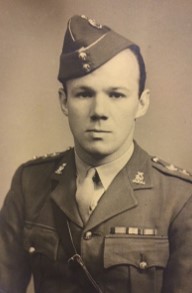
Figure 1: Tony Ginger in uniform, post-war, exact date unknown (Ginger/Bytheway families)
Growing up near Aynho, close to the Northamptonshire border, Ginger spent much of his youth playing cricket. When he moved to Oxford in 1936, aged 17, he entered the banking profession despite his family’s connection to farming. Seven years later, in 1943, he married Pam. His years spent in the Oxfordshire Yeomanry, where he rose to the rank of Captain, were marked particularly by the liberation of Bergen-Belsen.
To Tony Ginger, one of the most important roles he felt he now held was ensuring people in Oxfordshire knew Bergen-Belsen was not a propaganda story. He sent letters to his mother recounting his experiences and repeating the call for understanding in his home county. One letter, sent on 21 April 1945, was especially potent and reveals Ginger’s struggle to come to terms with what he had witnessed. He wrote, “I expect the silly devils at home will say it is propaganda to make us hate the German people. If anyone and everything in England could see Belsen as we saw it, Germany would die as she really deserves” (figure 2). His request for this letter to be published in the newspaper was followed, and people across Banbury could read Ginger’s emotionally charged language from the other side of the Channel. Today, our understanding of the Holocaust and its perpetrators is necessarily more nuanced. However, Ginger’s letter and its publication remain important historical evidence. The need Ginger felt to share the truth with the world, even if it was coloured by anti-German sentiment, shows how important Ginger saw his place as an eyewitness to the Holocaust.
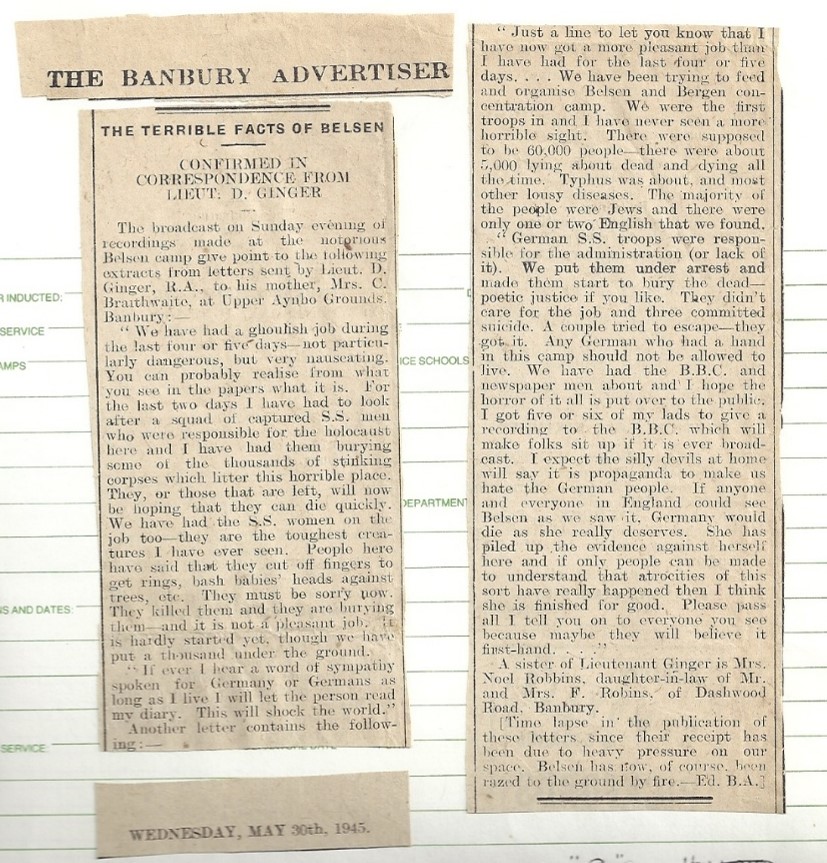
Figure 2: A clipping from the Banbury Advertiser (30th May 1945) containing Ginger’s published letter to his mother, originally handwritten (Ginger/Bytheway families)
So, what about Ginger’s photobook? In April 1945, he had few opportunities to show photographically what he had witnessed during the liberation. Instead, he had to resort to using his own descriptions and hoping that his connection to the area would help legitimise his account. After he had been given the packet of photographs, however, he suddenly had an opportunity to create his own visual record of the horrors of the Holocaust. Each two-page spread contains only one photograph, allowing each image to have its moment.
Ginger was known to get the album out if Bergen-Belsen became a topic of conversation. The arrangement of the pages therefore gave him time to talk through the story behind each photograph and its accompanying caption. These captions are often personal and honest, describing a liberator’s understanding of the future of Bergen-Belsen. Often, a survivor is described as shocked that they have made it to the end of the Holocaust. The album does not, however, explore the continuing medical crisis, the difficult future many survivors faced in Displaced Persons camps, or the political divisions that prevented some from returning home.
Despite these omissions, the care with which Ginger assembled and captioned the album suggests the importance he placed on the people depicted. The very act of creating the album demonstrates the importance Ginger placed on preserving and commemorating these images. The individual captions and carefully considered format further establish the photobook as an important record of Oxfordshire’s involvement in the liberation and of Ginger’s attempt to make his experience tangible.
When we see Ginger’s photobook today, we have a much different understanding of the Holocaust than the readers of the Banbury Advertiser in 1945. You may have already seen the photographs in the case or perhaps have read books and watched documentaries about the Holocaust. The widespread popularity of The Diary of Anne Frank, alongside her death at Bergen-Belsen and the British involvement in its liberation, have kept it somewhat in the British memory of the Holocaust, despite the overwhelming presence Auschwitz now holds.
Looking at Ginger’s photobook today gives new life to his wish that Bergen-Belsen should be remembered “as we saw it,” long after the passing of first-hand eyewitnesses. He has curated for us a way of connecting with his particular view of Bergen-Belsen and allows each visitor at SOFO to stop for a moment and witness one of the most difficult parts of being a soldier, and one of the most important actions of the Oxfordshire Yeomanry. Because of the nature of the object, we can only see one spread at a time. Each individual will look at these pages differently and, without Ginger’s vocal stories, we rely on his captions to explain the specific emotional engagement he attached to each photograph. Yet, even without Ginger’s voice to guide us, the album remains an invitation to witness. Eighty years later, each visitor who pauses before the pages of his album becomes part of the process of remembering that he began in April 1945 in a heartfelt letter to his mother.
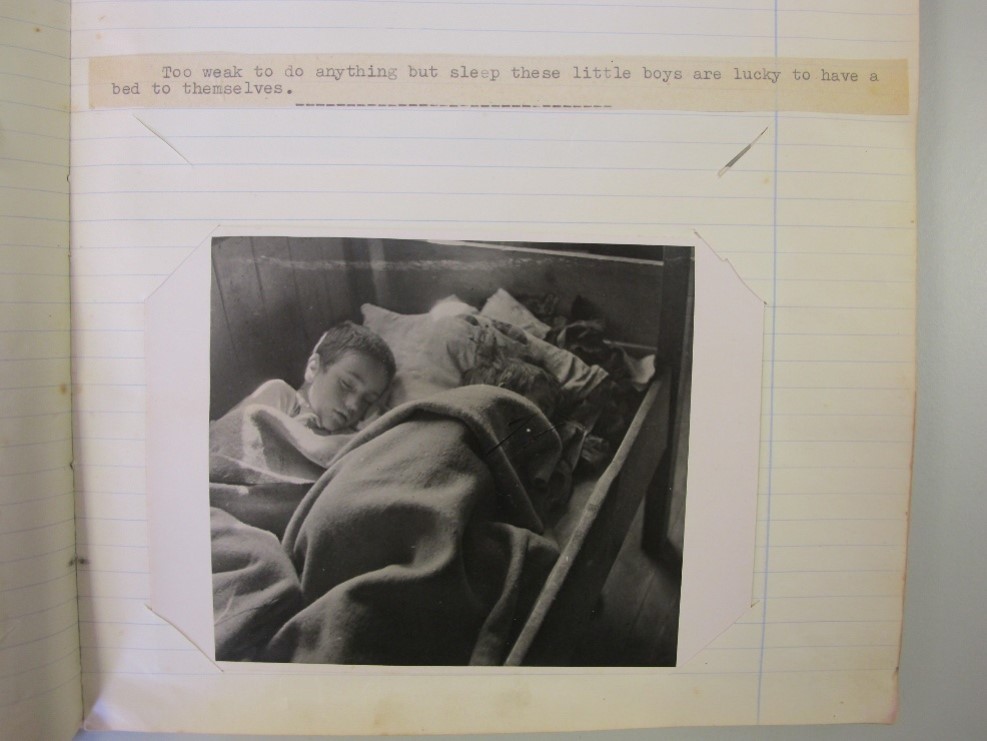
Figure 3: A page from Tony Ginger’s photobook. The caption reads, ‘Too weak to do anything but sleep these little boys are lucky to have a bed to themselves.’ (Ginger/Bytheway families)
With thanks to the Ginger/Bytheway families for use of the images in the article.